The average temperature on earth has declined over the past two years by about half a degree Celsius - an amount that similar to the temperature increases reported over the past century. This year may be the coldest on record in the past century. All four major global temperature tracking outlets (Hadley, NASA's GISS, UAH, RSS) reported that during the period of January 2007 to January 2008, global temperatures have dropped significantly. 2008 has set a number of records for cold and snowfall. In the U.S., NOAA recorded over 60 local snowfall records and more than 100 all-time low temperatures for the month of October.

This cooling trend - whatever its cause - was not predicted by climate models. It was, however, predictable, at least according to some scientists who study sunspot activity. Since 2000, sunspot activity has been in decline, and this year sunspot activity has matched an inactivity level not seen since the early 1900s. The sunspot activity on the sun ordinarily follows an 11 year cycle where the activity peaks and then slows. It isn't unusual to record 100 sunspots in a single month, and then as then cycle winds down, the number can decline to near zero. Typically, a new cycle begins fairly quickly, but not this year. Through July of this year the average monthly total was three, and in August there were none recorded.
According to the publication Daily Tech, over the last 1,000 years, there have been three previous similar events — known as the Dalton, Maunder and Sporer Minimums. These events have each corresponded to rapid cooling. The largest came to be known as the Little Ice Age (1500-1750). Geoscientists have found excellent correlations between periods of warming and cooling on earth and sunspot activity.
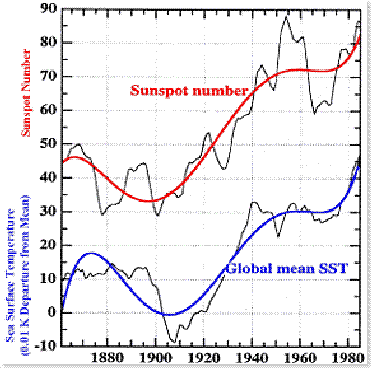
http://www.oar.noaa.gov/spotlite/archive/spot_sunclimate.html
http://www.physicalgeography.net/fundamentals/7y.html
That is not to say that human activity is a non-contributor to global climate. But it is interesting to note the sunspot activity and the apparent correlation to global temperatures. It will be interesting and to see if this period of cooling is prolonged, and should it be, may be a hidden benefit in that it may offset some of the climate change predicted to occur in the next century, giving us an extension that seems to be much needed in reducing the impact of human activity on climate.


 Posts
Posts


